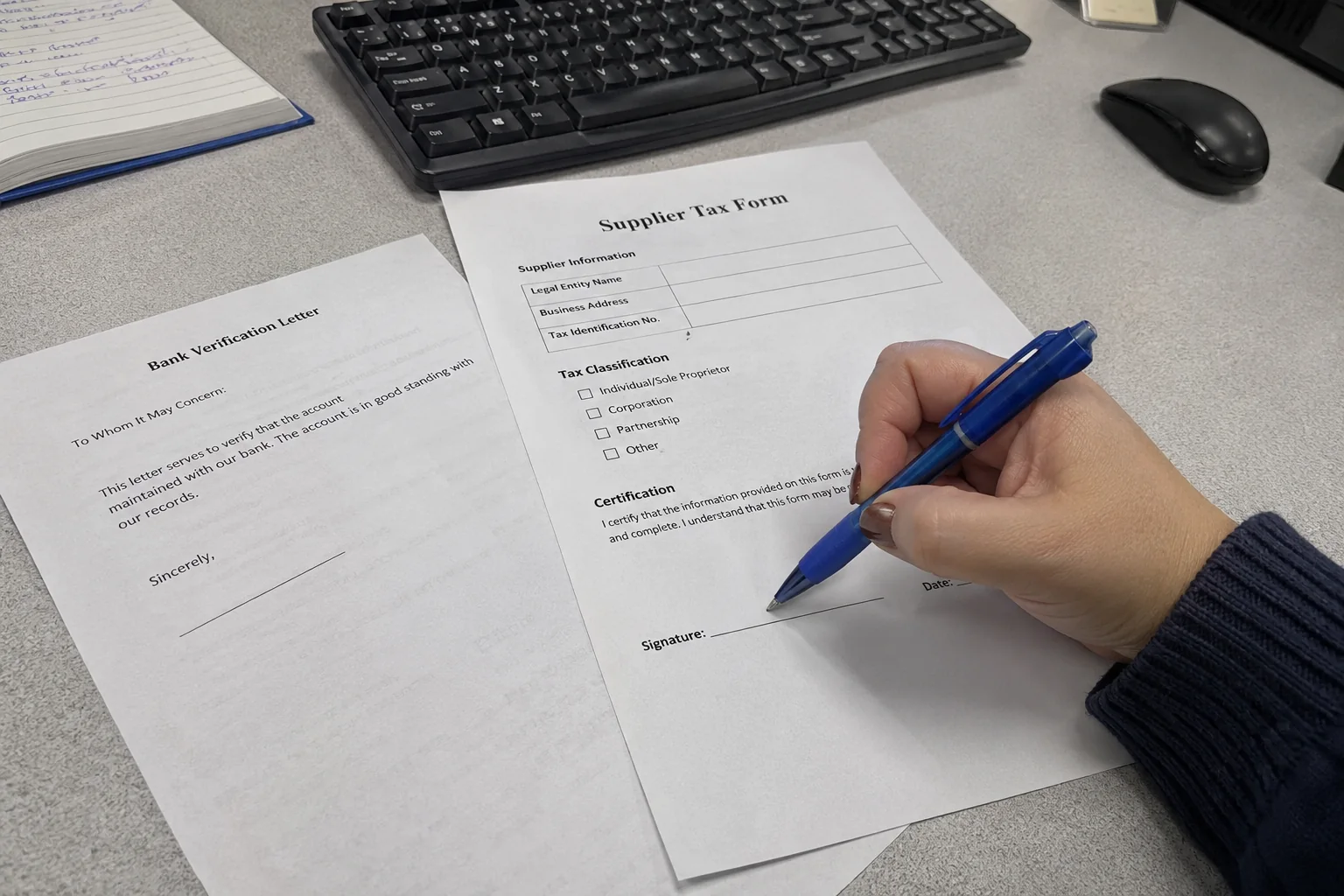
A client emails an agency account manager on Tuesday asking to pause two deliverables, shift budget to a new landing page, and revise the launch date noted in an attached PDF markup. An inbox automation summarizes the message and overwrites the project notes in the tracker. Two weeks later, when the client questions the invoice, nobody can tell whether the disputed scope came from the client’s original attachment or from how the language model paraphrased it. The workflow moved fast, but it overwrote the only copy of what the client actually asked for.
Why overwriting original requests breaks operational trust
When an AI step rewrites a customer email, form submission, or attached PDF directly inside your project tracker or CRM, any misunderstanding in the model’s summary becomes the official record. Data engineers solved this same problem in large analytics pipelines with what they call the medallion architecture: instead of editing incoming data in place, they pass it through three separate tiers named Bronze (raw data as received), Silver (cleaned and structured working records), and Gold (finalized business records).
Translated into everyday office operations, those three tiers map to a habit every service business already understands. The first stage (Bronze) is the untouched archive: the exact text, sender details, timestamps, and attachments as they arrived. The second stage (Silver) is the working case where an AI teammate extracts key fields, links back to the original message, checks which rules apply, and flags anything unclear. Because the working case links to the original submission instead of replacing it, a colleague can always check the customer’s exact words.
The third stage (Gold) is the approved business commitment: a revised project scope, an authorized credit memo, or an updated delivery schedule. In our approach to harness engineering, an AI agent can assemble the middle working case, but promoting a change into your system of record requires the checks and human approval your business has defined.
Workflow in practiceFrom original request to approved commitment 01 Bring the evidence Original requestOriginal attachments02 Prepare and check Prepare the working case- Create a source-linked draft
- Keep the original untouched
03 Keep the decision Account ownerApproved decision in the core record
Human reviewA working draft does not overwrite an approved commitment.
Illustrative workflow. Preparation and checks do not grant approval.
Praxis and data or integration tools: choose the right layer model
This is a Praxis editorial guide adapted from enterprise data and AI architectural principles for small and medium-sized operations. Product facts use official documentation; the workflows below are evaluation exercises, not hands-on benchmarks.
What to compare Tool Role in the workflow Question to test Praxis An operational workspace separating raw requests, working context, and approved outcomes Can the reviewer inspect the original request alongside the prepared working case before approving? Databricks Lakehouse Enterprise data engineering pipelines across raw, cleaned, and analytical tables Is your goal transforming database tables across cloud storage with a data engineering team? Direct sync pipelines and webhooks App-to-app intake and record updates Where does the working draft live between the incoming trigger and the final app update? Praxis
Praxis brings people, AI teammates, and business apps into a shared operating context. When a step pauses for review, the person responsible receives what needs to happen, what has happened so far, which rules apply, and what still needs attention. The Praxis approach
Choose Praxis when your team wants to co-build an operational harness where AI prepares the working record while human sign-off governs what becomes an official business commitment.
Databricks Lakehouse
Databricks popularized the three-tier medallion pattern on Delta Lake so engineering teams can retain raw tables and enforce schema rules before serving curated analytics. Official source
It is a strong fit for data platform teams managing analytical and machine-learning pipelines at scale, rather than front-office teams reviewing individual client requests and approvals.
Direct sync pipelines and webhooks
A direct sync pipeline or webhook handler can move an incoming payload into another business app. Keep an untouched copy of the submission and a separate working record before committing an approved change.
This approach suits a narrow integration when someone can maintain its storage, error handling, and review gate. Moving data alone does not establish who may approve the final update.
Test three-stage separation on a client scope-change request
Keep the original submission untouched (stage one: raw intake)
Take five representative client change requests, including email bodies and attachments. Save the original message, timestamp, and file under a stable request ID before any model summarizes or reformats the text.
Prepare a structured working draft linked to the source (stage two: working case)
Have the agent extract the account name, requested change, affected deliverables, and proposed effective date into a separate working record. Require every extracted field to reference the passage or attachment it came from, leaving unstated terms blank.
Compare the working draft against the original request during review
Give one request a conflicting date between the email body and the attached PDF. Confirm that the working record surfaces the discrepancy as an open item rather than picking one date and overwriting the history.
Record the approved decision and owner in your core system (stage three: commitment)
Have the account owner review the working case, resolve the open question, and approve the scope update. Verify that the final record logs the decision, the reason, and the person who approved it while keeping the original submission intact.
Keep working drafts editable and original requests permanent
When evaluating an AI workflow, ask what happens when a summary is wrong. If correcting an agent’s draft requires digging through a colleague’s personal inbox to find what the customer originally wrote, the stages are collapsed. Separate the raw submission, the working case, and the approved commitment so your team can revise a draft without losing the record.
How Praxis structures intake, preparation, and commitment
Praxis is built around a straightforward proposition: automate your business without losing judgment, and build your own harness with us. Instead of letting an unguarded prompt overwrite live business records, you define what AI prepares and where the workflow pauses for a person.
Start with one recurring request where wording and history matter, such as client scope adjustments or supplier terms. Join the waitlist with your business website and bring a sample request to map how intake, review, and approval should run for your team.
Common questions
Why is this called the medallion pattern, and where do Bronze, Silver, and Gold come from?
The name comes from enterprise data engineering, where teams label three progressive stages of data quality after medals in the medallion architecture: Bronze for raw inputs as received, Silver for cleaned and checked working records, and Gold for finalized records ready for business use. For a small operations team, the value is the three-stage habit itself: separating the customer’s untouched request, the AI-prepared working case, and the human-approved update.
Why not let an automation write directly from an email into our CRM or project tool?
Direct writes collapse preparation and commitment into a single step. Even if an integration logs run history and handles API errors, a summary that misreads a client email will still look like a valid update unless a separate working stage holds it for inspection.
Does a 15-person company need data engineers to use this three-stage approach?
No. For a small team, the pattern is an operational rule about record ownership rather than a database project. You can apply it by keeping original submissions read-only, staging AI drafts in a reviewable case, and requiring an owner’s sign-off before updating core systems.